Family reunification in Serbia: conditions, documentation and procedure for foreign citizens
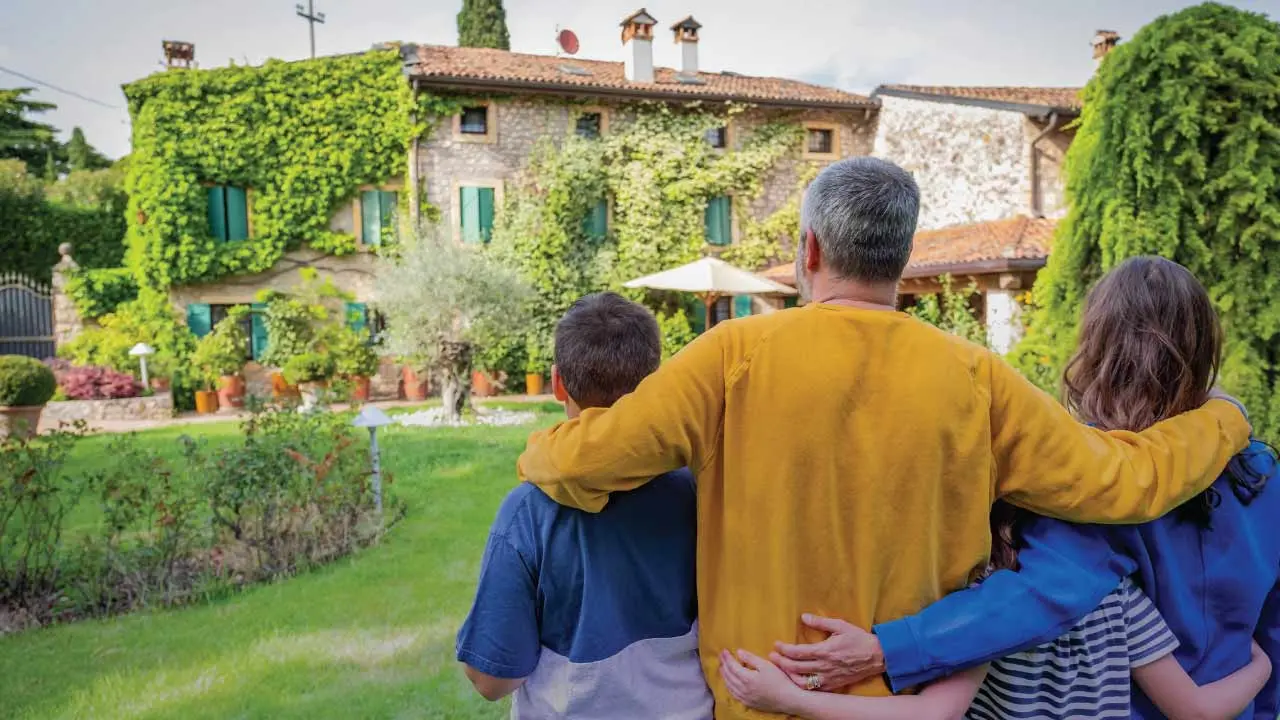
When a foreign citizen starts living or working in Serbia, very often after the first administrative steps, the next important question arises: how to legally join his family. In practice, it is one of the most important steps for people who are not only planning a temporary arrival, but want to organize their family and business life in Serbia in a stable way.
Family reunification in Serbia is the basis on which family members can regulate their stay in the country. Although at first glance it seems like a simple procedure, this procedure requires a proper understanding of the basics of residence, carefully prepared documentation, accurate translations and a good assessment of whether a D visa is needed first in a specific case or whether it is possible to go directly to regularization of residence.
In this guide, we explain how family reunification works in Serbia, who can submit a request, which family members can be included, when visa D is required, how temporary residence based on family reunification is regulated and which documentation is most often required.
What does family reunification mean in Serbia?
Family reunification in Serbia is a legal basis that enables family members of a foreign citizen or other person with appropriate status in Serbia to regulate their stay in the country in order to live together in Serbia.
This topic is particularly important for:
- foreign citizens who already live and work in Serbia
- persons who founded a company in Serbia
- foreign citizens who are married to a person who already has a regulated residence
- parents who want their children to join them
- families who want to move to Serbia together
In practice, family reunification is not just an administrative addition to one’s existing status. It is a special legal path that must be set up correctly, because it depends on whether the family members will be able to stay legally in Serbia and later extend their status without problems.
Who can request family reunification in Serbia?
One of the most important things to understand at the beginning is that family reunification is not initiated randomly and without previously arranged status of the main family member. In most cases, a person who wants to bring his family to Serbia must first have a suitable residence status or other relevant basis that allows him to start this procedure at all.
In practice, this most often means that the main family member is already:
- legally resident in Serbia
- employed in Serbia
- business owner or self-employed
- a person who already has an approved temporary residence
- a person who has another appropriate reason for a longer legal stay
That is why it is very important not to plan family proceedings separately from the status of the main family member. If his residence is not properly arranged, it will almost certainly affect the possibility of family reunification.
Who is considered a family member?
When talking about family reunification in Serbia, users often start from the assumption that it is enough to say that someone is a family member. However, in practice, it is much more important how the specific family relationship is documented and whether it corresponds to the basis on which the residence is requested.
Most often, relevant family members appear as:
- spouse
- children
- other dependent family members, when there is a suitable basis and documentation for this
This is where frequent mistakes occur. People often do not check in advance whether their family relationship can be proven with documents that will be accepted in the procedure, nor whether these documents will have to be translated, certified or additionally prepared for use in Serbia.
Is a D visa required for family reunification?
Whether a visa D is required for family reunification in Serbia depends on several factors, primarily on the citizenship of the person arriving, his/her method of entry to Serbia and the planned length of stay.
In many cases, the D visa is the first step for a person coming for a longer stay based on family reunification. Therefore, it is important not to leave this question for the end, but to assess it right at the beginning.
The most common mistake in practice is the assumption that the family connection by itself automatically solves both the issue of entry and the issue of residence. That is not enough. It is necessary to see the whole path properly:
- is visa D required
- whether temporary residence is regulated after that
- whether the basis of residence is stated correctly
- whether the family relationship documents have been prepared properly
Temporary residence based on family reunification
Temporary residence based on family reunification is one of the most important steps for family members who want to stay in Serbia legally and for longer than a short-term stay.
This basis is particularly important for:
- spouses who join their partner in Serbia
- children who come to live with their parents
- families who want to live together in Serbia on a stable basis
In practice, it is very important to distinguish the actual arrival in Serbia from the subsequent adjustment of the residence status. Many users think that the problem is solved as soon as the family member enters Serbia. However, entry and lawful overstay are not the same thing.
That is why temporary residence based on family reunification is a central topic for anyone who wants to set up family life in Serbia in a legal and sustainable way.
What documentation is most often required
Documentation for family reunification in Serbia depends on the specific case, but in practice there are certain groups of documents that are most often requested or checked.
Most often, it is necessary to prepare documentation related to:
- identity of family members
- proof of family relationship
- proof of the status of the main family member in Serbia
- residence or address information
- other supporting documents depending on the specific case
One of the most common obstacles is not just the lack of a document, but that the document is not properly prepared. In family proceedings, foreign extracts, certificates or other documents are often used, which cannot be used properly without translation, certification or additional preparation.
Why translations and certifications are important
In the case of family reunification, translations and notarizations are not a secondary matter. They are often one of the key elements of the procedure. When documents originate from abroad, it is very important that they are properly translated and prepared for use before the competent authorities in Serbia.
This usually refers to:
- extracts from registers
- certificates of family relationship
- other personal and status documents
- documents used as evidence in the proceedings
If the translation is not appropriate, if the document is not properly prepared or if it is not checked whether additional authentication is required, the process can be prolonged and create additional complications.
For foreigners who do not know enough about the administrative system in Serbia, this is often one of the most stressful parts of the process. This is exactly why it is important that the documentation part is conducted carefully and without improvisation.
What the step-by-step procedure looks like
Although the specific details differ from case to case, family reunification in Serbia usually goes through several basic steps.
The first step is to determine whether the main family member has the appropriate status in Serbia and whether there is a legal basis for family reunification.
The second step is to check whether the incoming family member needs a D visa or can proceed directly to the further residence procedure.
The third step is the collection of documentation. This includes family documents, identification documents, evidence of status in Serbia and everything that is needed for a specific basis.
The fourth step is translations, certifications and preparation of documentation for use in the procedure.
The fifth step is submitting a request and following the procedure.
The sixth step is to arrange and maintain the residence status of family members after approval.
When the procedure is followed in this order, it is much easier to avoid the mistakes that most often occur in practice.
How long is the stay and what does the extension look like?
Family reunification should not be seen only as a first entry or first residence permit. It is equally important to understand how status is maintained and what extension of stay based on family reunification looks like.
For many families, the real challenge comes not at the beginning, but later, when it’s time to extend and check:
- does the same ground still exist
- whether the documentation is still in order
- whether family circumstances have changed
- whether the request is submitted on time
A delay or incorrect planning of the extension can create a problem for both the main family member and the person residing on the basis of family reunification. That is why it is important to monitor the extension in advance, and not just when the expiration of the valid status is approaching.
The most common mistakes in the family reunification process
In practice, several mistakes are repeated very often.
The first mistake is the assumption that it is enough that a family relationship exists, without checking whether it can be properly proven in the proceedings.
Another mistake is the belief that marriage or a family relationship automatically solves the issue of residence. In reality, it is necessary to carry out a special residence procedure.
The third mistake is incomplete documentation. Many applicants do not prepare everything necessary in advance or do not take into account whether the documents must be translated and certified.
The fourth mistake is misunderstanding the relationship between the D visa and temporary residence. This often leads to the wrong order of steps.
The fifth mistake is to start proceedings or extensions late, which can cause additional stress and legal uncertainty for the whole family.
Family reunification after marriage with a foreign citizen
Many users start thinking about this topic only after marrying a foreign citizen or after registering a family union. Then the question is often raised whether the marriage itself is sufficient to automatically regulate the spouse’s residence.
In practice, the wedding is an important step, but it is not the end of the process. After that, the question still remains:
- how the spouse enters or stays in Serbia
- is visa D required
- how temporary residence is regulated
- which documentation is used as proof of family relationship
- whether translations and certifications are required
That is why it is important that even after the wedding, the entire procedure is viewed as a separate administrative and legal process.
How Derya Group Consulting can help
Derya Group Consulting provides support to foreign citizens and families who want to regulate family reunification in Serbia. This includes helping to understand the process, organizing documentation and connecting the various administrative steps that are often intertwined.
The special value of such support exists when it is necessary to combine:
- residence procedures
- family documentation
- certified translations
- court interpreter when needed
- practical help to foreigners in Serbia
For families who are going through this procedure for the first time, it is important to have a clear picture of what the first step is, what follows after that, and how to manage the entire process without unnecessary mistakes and delays.
Conclusion
Family reunification in Serbia is much more than a simple administrative request. It is an important legal and life step for foreign citizens who want to organize a stable family life in Serbia.
The most important thing is to determine in time:
- whether the main family member has the appropriate status
- is visa D required
- which family members may be covered
- what documentation is required
- how temporary residence is regulated
- how to plan to extend the stay later
When these steps are set up correctly from the beginning, the whole process is safer, clearer and easier for the whole family.
Frequently asked questions
Who can apply for family reunification in Serbia?
The request for family reunification in Serbia is linked to the status of the main family member who already has a suitable basis for staying in Serbia. That is why it is most important at the beginning to check whether this basis exists and how it is properly proven.
Is a D visa required for family reunification?
In many cases, the D visa can be the first step for a family member coming for a longer stay in Serbia. Whether it is required depends on citizenship, method of entry and specific case.
Can the spouse get temporary residence in Serbia?
Yes, temporary residence based on family reunification can be a way for the spouse to regulate legal residence in Serbia, provided that there is a suitable basis and properly prepared documentation.
Can a child regulate residence based on family reunification?
Yes, a child can be included in the family reunification process, but it is important to check in advance what documentation is required and how the specific family relationship is proven.
What documentation is most often required?
Most often, documents are required that confirm the identity, family relationship and status of the main family member in Serbia, as well as other supporting documentation depending on the specific case.
Are certified translations of foreign documents required?
Very often they are. When documents originate from abroad, it is important to check whether translations, certifications and additional preparation are needed so that the documents can be properly used in the proceedings in Serbia.
What does the extension of stay on the basis of family reunification look like?
Extending the stay based on family reunification requires checking whether the basis still exists, whether the documentation is in order and whether the procedure is initiated on time. That is why it is important not to leave the extension to the last minute.